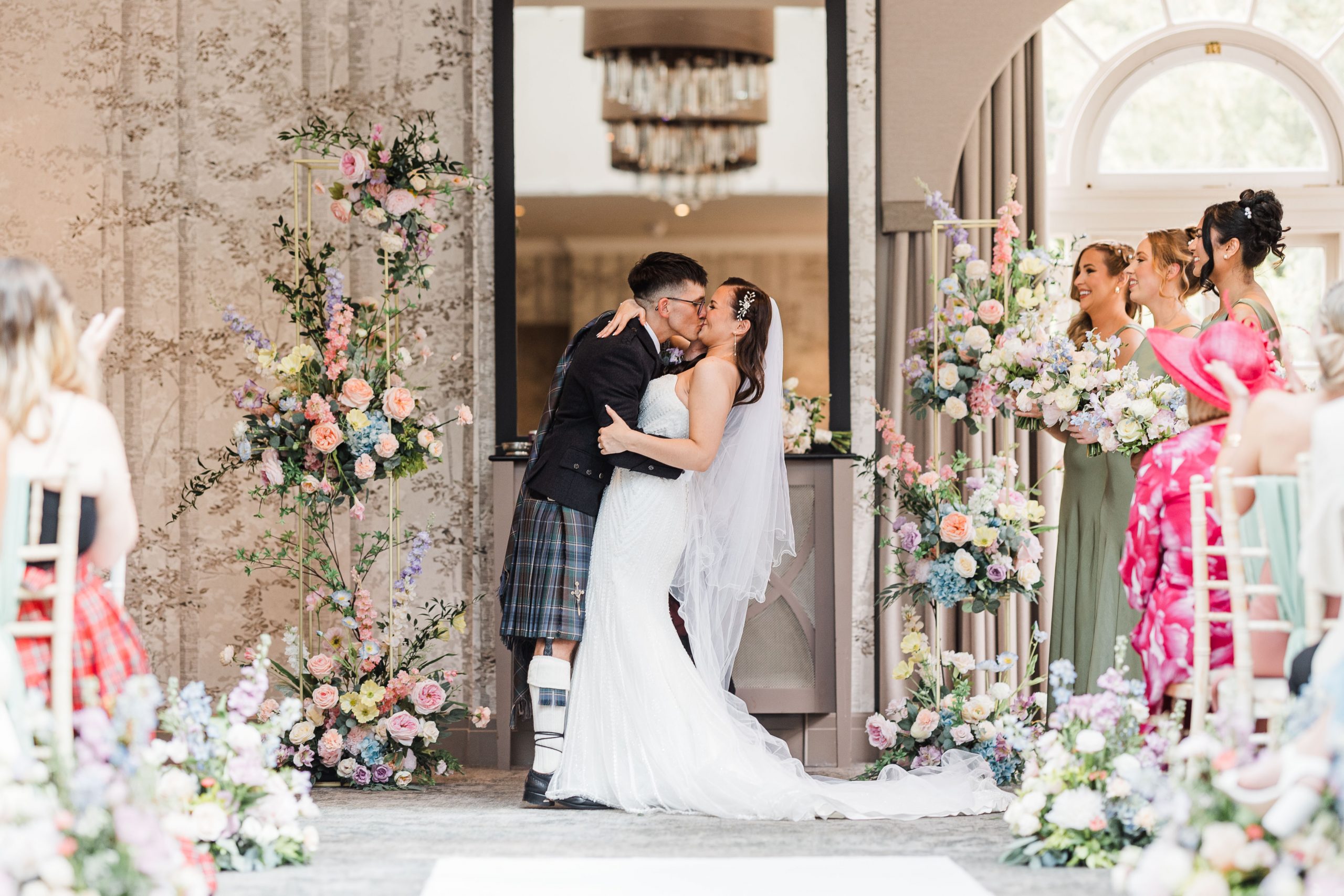
Florals shape so much of the atmosphere – the softness of a ceremony space, the welcome at the entrance, the way a table feels once everyone sits down – so knowing how to plan wedding flower budget early gives you far more freedom to create something beautiful and considered.
A good floral budget is not about stripping everything back until it feels purely practical. It is about choosing where flowers will have the biggest emotional and visual impact, then designing with intention. When couples approach it this way, the result usually feels richer, more personal, and far less stressful.
How to plan wedding flower budget with clarity
Start with the overall wedding budget, not Pinterest. Before you fall in love with an abundant floral arch or an aisle lined with meadow arrangements, look at the full picture of your day. Florals sit alongside venue hire, catering, photography, attire and entertainment, so they need their own realistic share of the budget from the outset.
For some couples, flowers are one of the defining elements of the day. If your venue is quite neutral, if you care deeply about styling, or if you want your wedding to feel immersive and garden-inspired, florals may deserve a larger proportion. If your venue is already visually rich – perhaps it has characterful interiors, beautiful grounds or dramatic architecture – you may need less floral volume to create impact.
This is where priorities matter more than rules. There is no universally correct percentage because every wedding is styled differently. A smaller guest list with a strong design focus might spend more on flowers than a larger wedding with simpler styling. It depends on what matters most to you and what your venue needs.
Begin with moments, not item counts
One of the most helpful ways to budget is to think in moments rather than a long shopping list of floral pieces. Ask yourselves where flowers will actually be seen, photographed and felt.
Usually, those moments are the personal flowers, the ceremony, and the reception tables. From there, you can decide what deserves to lead. For some couples, the bouquet is the emotional centrepiece. For others, it is the ceremony backdrop, top table, or a statement arrangement that greets guests on arrival.
When you plan this way, your budget starts telling a story. Instead of ordering one of everything because it seems expected, you invest in the parts that create atmosphere and reflect your style. A single abundant ceremony design can often do more than lots of smaller pieces scattered thinly across the day.
Understand what you are really paying for
Wedding flower budgets are not simply the cost of stems. They include design time, conditioning and preparing flowers, mechanics, vessels, styling decisions, delivery, on-site installation and, in many cases, collection afterwards. If you are commissioning bespoke floral design, you are paying for creative direction as well as the finished arrangements.
That matters because two weddings with the same flower varieties can still sit at very different price points. A hand-tied bouquet and bud vases are one thing. A floral arch, suspended installation or layered tablescape with candles, vessels and moving parts is another entirely.
This is why it helps to be honest with yourselves about the kind of floral experience you want. If you are drawn to artful, natural designs that feel abundant and tailored to your venue, your investment needs to account for the labour and expertise required to achieve that look. There is no shame in wanting beautiful flowers. The key is matching that vision with a realistic budget from the beginning
Seasonality makes a difference, but not always in the way couples expect
Seasonal flowers can be a lovely place to start, especially if you want your wedding to feel connected to the time of year. Spring brings a gentler kind of romance, summer can feel abundant and airy, autumn has depth and texture, and winter florals often lean into shape, movement and mood.
Choosing flowers that are naturally at their best around your date can help your budget stretch more gracefully. It also tends to create arrangements that feel more relaxed and expressive, rather than forced into a look the season is resisting.
That said, seasonality is not a magic trick. Some flowers are costly because they are delicate, labour-intensive, or in high demand, even when they are in season. An experienced florist can often suggest alternatives that give a similar feel without relying on one specific bloom. If you love a soft, ruffled, romantic look, for example, there may be several ways to achieve it depending on the month.
Wedding Flower Budget-Let your venue guide the spend
A marquee, barn or blank-canvas venue often asks more of florals because there is more visual space to shape. A historic venue, country house or elegant restaurant may need a lighter touch because the setting already brings atmosphere.
This is an important trade-off. Couples sometimes assume they need to decorate every corner, when in reality the most effective design responds to the venue rather than competing with it. If your ceremony room has beautiful windows and old stone walls, flowers may be best used to soften and frame rather than fill. If your reception space is plain, a stronger floral statement might be what brings it to life.
When couples are getting married in Dundee, Angus, Fife or Perthshire, venues often vary hugely in character – from rural barns to refined estates to coastal settings. The most thoughtful budgets take that into account, because flowers should work with the space, not against it.
How to spend wisely without losing the romance
If you want your florals to feel elevated but your budget is not unlimited, focus on versatility. Repurposing is one of the simplest ways to get more from your investment without making the designs feel compromised.
Ceremony arrangements can often move to the reception. Meadow-style aisle flowers may frame the top table later in the day. Plinth arrangements can be repositioned at the entrance, beside the cake or near the bar. This works especially well when floral planning is considered as part of the whole wedding design rather than split into separate boxes.
Scale also matters. A few larger, intentional pieces tend to read as more luxurious than lots of very small arrangements spread too thinly. Guests remember the feeling of a space, not whether every surface had flowers on it.
It is also worth being open-minded about where flowers are not essential. Not every pew end, chair back or corridor needs dressing. Sometimes the most romantic choice is restraint – letting one area sing while the rest of the day breathes around it.
Wedding Flower Budget-Be clear about your non-negotiables
Most couples have one or two floral elements they care about deeply. It might be a bouquet with that just-gathered garden feel. It might be statement aisle flowers. It might be reception tables that feel candlelit, layered and full of movement.
Name those priorities early. Once you know your non-negotiables, it becomes much easier to trim the things that matter less. This protects the heart of your design instead of reducing everything evenly until it feels diluted.
If you are torn between fully bespoke wedding flowers and something more guided, curated wedding packages can also be a helpful route. They give you a clearer starting point and often make decisions feel less overwhelming, while still allowing space for personality and styling.
Talk to your florist early and talk honestly
The most useful floral conversations happen when couples are open about budget, expectations and the feel they want to create. A good florist is not there to judge your budget. They are there to help you make the most of it.
Share your venue, your rough guest count, the parts of the day you want flowers for, and a few words that describe the atmosphere you are drawn to. Romantic and airy feels different from sculptural and modern. Wildly beautiful and garden-inspired requires a different approach from neat and minimal. These details help shape recommendations that are both creative and practical.
What matters most is honesty. If your budget is modest but your inspiration is highly elaborate, the conversation should be about translating the essence of that look rather than pretending the same scale is achievable. That is where thoughtful design comes in.
Planning your wedding flowers should feel exciting, not like a guessing game. When your budget is built around priorities, seasonality, venue and the feeling you want guests to walk into, flowers stop being a last-minute add-on and become part of the story you are telling from the very beginning.


